Construction is one of the highest-risk industries in America, and for good reason. Every jobsite combines heavy equipment, physical labor, third-party property, tight deadlines, and real financial stakes. One accident, one damaged structure, or one lawsuit can wipe out a project's profit, or the business itself. That's why construction business insurance isn't optional paperwork; it's the safety net that keeps contractors and builders operating when something goes wrong.
This guide breaks down the coverages every construction operation needs and how they fit together.
What is Construction Insurance?
Construction insurance is a major area of construction business insurance that’s created for protection of contractors, builders, and their projects from financial loss. This covers those unique risks for the building sites, from the equipment damage towards workplace injuries, thus ensuring that the business stays afloat even when the unexpected actually or may happen.
Why Construction Carries Elevated Risk
Few industries pack so much exposure into a single worksite. Workers operate at heights and around dangerous machinery. Projects involve other people's property and buildings under construction that can be damaged by fire, weather, or theft. Subcontractors, clients, and the public all move through the site. And a single injury or defect claim can run into six or seven figures. Generic business coverage rarely accounts for all of this, which is exactly why purpose-built construction business insurance exists.
Why Construction Businesses Need Insurance
Construction that’s actually a high-risk industry. Based on the Bureau of Labor Statistics, the construction that has the highest rates towards non-fatal injuries in the workplace. You need that coverage:
- Property Damage: Accidents that can damage the client’s property.
- Employee Injuries: Medical bills towards workers that can hurt your job.
- Lawsuits: The legal fees for the third party sues you.
- Equipment Theft: Replacement of stolen tools plus machinery.
- Weather Damage: Protection of structures from floods to storms.
- Contract requirements: Meeting the mandatory coverage rules for winning bids.
- Client Trust: Proving towards a reliable and professional builder.
Benefits of Construction Insurance
The right for insurance for construction companies that provides financial security, giving you peace of mind and ensuring legal compliance for the highest mind to focus on building, and not worrying about potential disasters.
Types of Construction Insurance Every Contractor Should Consider
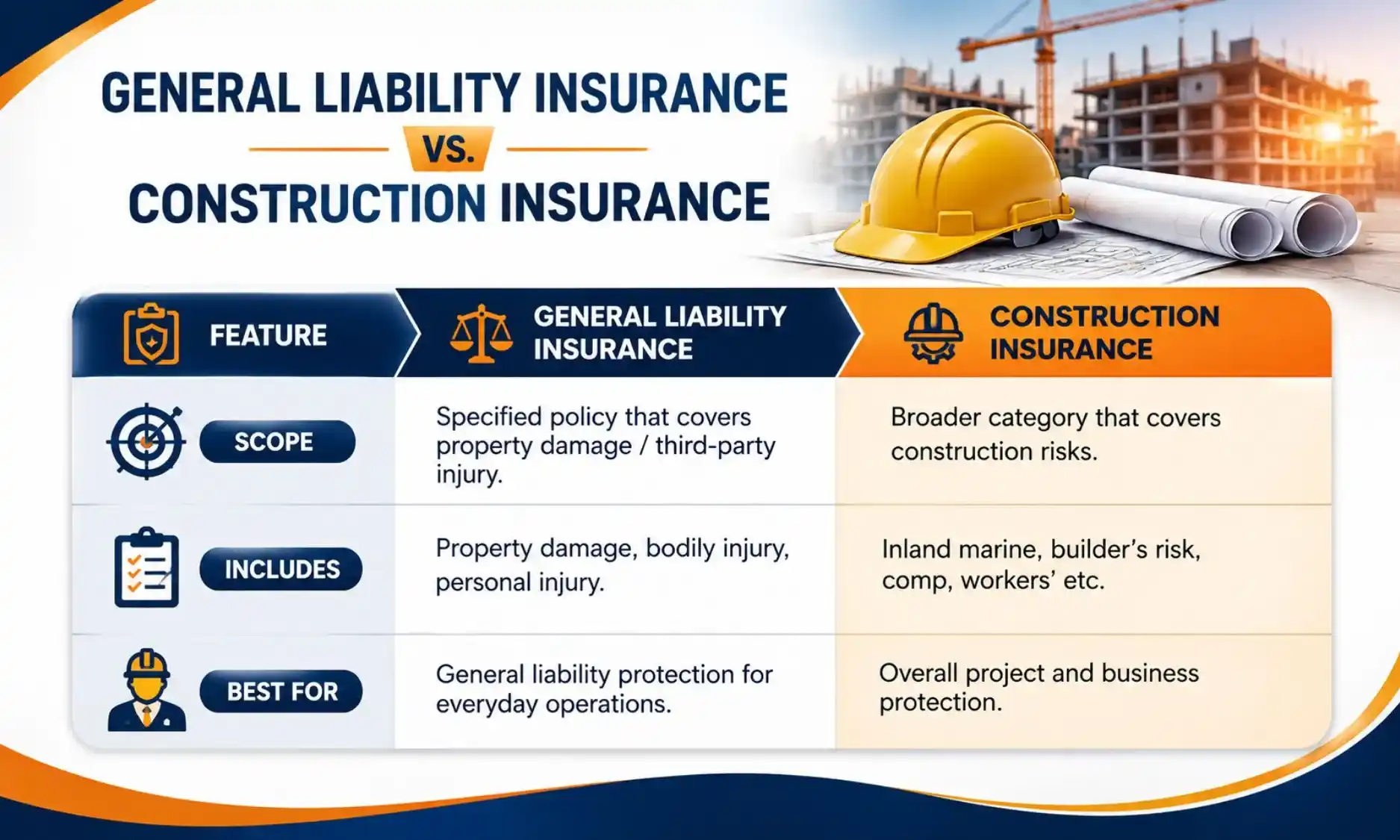
- General Liability Insurance: Covering property damage and third-party bodily injury.
- Worker’s Compensation Insurance: Paying for the medical care plus lost wages for an employee that’s injured (Workers Compensation Insurance) options.
- Builder’s Risk Insurance: Protection for building plus materials towards under construction.
- Professional Liability Insurance: Covering the design errors for engineering mistakes.
- Commercial Auto Insurance: Covering company vehicles that are used for work.
- Inland Marine Insurance: Protection of tools plus equipment that’s in transit.
- Equipment Breakdown Insurance: Replacement or covering repair of the machinery.
- Umbrella Liability Insurance: Providing extra coverage limits for the primary policies that are exhausted.
- Cyber Insurance: Protection against data breaches (optional towards growing for importance).
The Core Coverages Every Contractor Needs
General Liability. The foundation of any construction program. Contractor liability insurance covers third-party bodily injury and property damage — a passerby hurt near your site, or damage to a neighboring structure. Almost every general contractor, client, and municipality will require proof of it before you can start work.
Builders Risk Insurance. This is construction's signature coverage. Builders risk insurance protects a structure while it's under construction — covering the building, materials, and equipment on-site against fire, storm, theft, and vandalism before the project is complete. Without it, a fire that destroys a half-finished building means absorbing the entire loss yourself. It's typically written for the duration of the project and often required by lenders and property owners.
Workers' Compensation. Construction is physically demanding and injury-prone — falls, equipment accidents, and strains are common. Workers' comp is legally required in nearly every state once you have employees, covering medical costs and lost wages while shielding you from related lawsuits. It falls under the broaderumbrella of casualty insurance, alongside generalliability and commercial auto coverage. Given the industry's injury rates, thisis one of the most important lines a contractor carries.
Commercial Property and Equipment Coverage. Tools, machinery, and equipment represent major invested capital. Construction equipment insurance (often called inland marine or contractor's equipment coverage) protects your gear whether it's at the shop, in transit, or on a jobsite — against theft, damage, and loss.
Commercial Auto. Trucks, vans, and vehicles hauling equipment need commercial auto coverage; personal auto policies exclude business use.
What Does Construction Insurance Cover?
Not every incident is covered under a property and casualty insurance policy. Here'sthe basic breakdown:
Note: Read the policy exclusions very carefully.
Coverage by Contractor Type
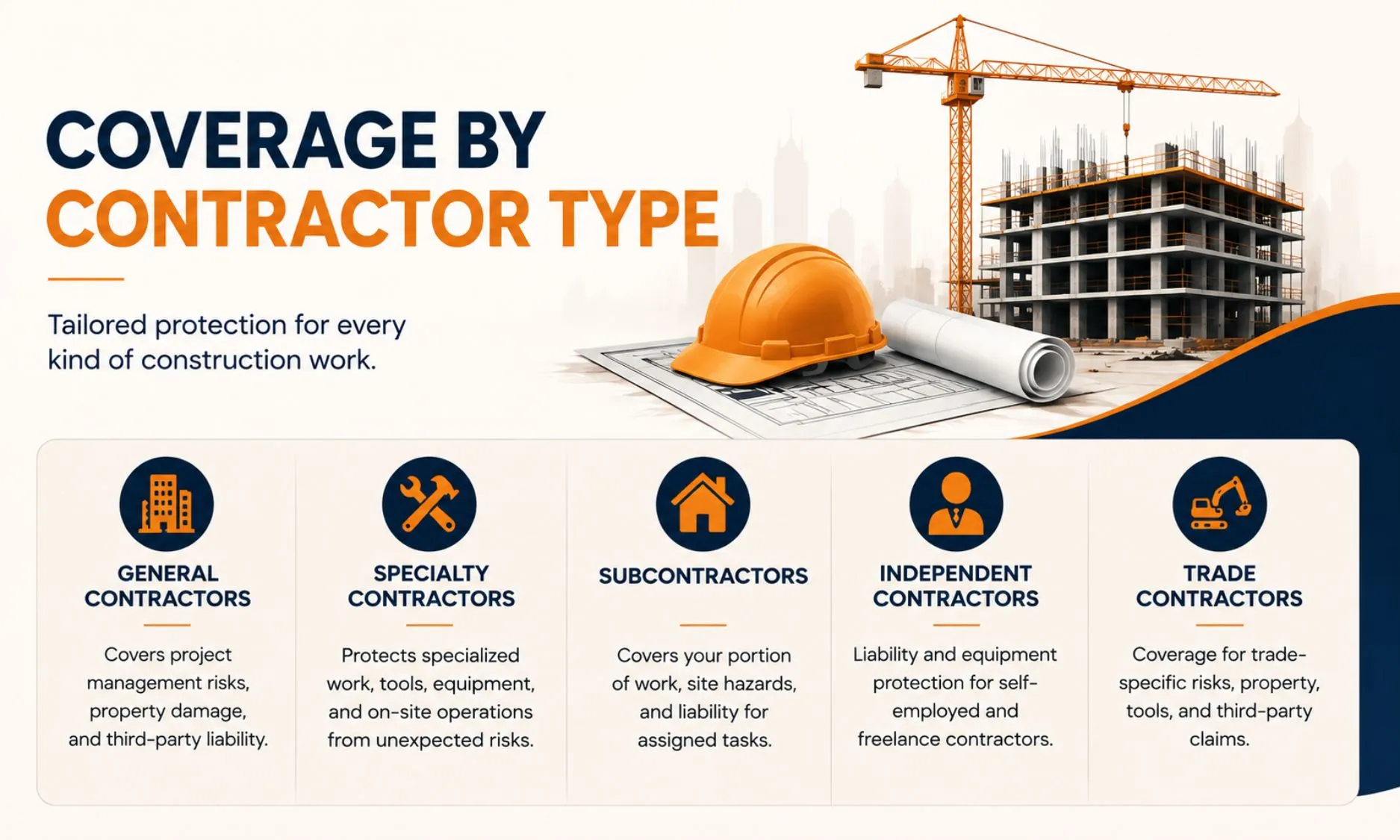
General Contractors. Need the full stack — general contractor insurance typically bundles general liability, builders risk, workers' comp, equipment coverage, and commercial auto, because GCs carry responsibility for the entire project and the subs working under them.
Specialty and Trade Contractors. Electricians, plumbers, roofers, and HVAC contractors need contractor liability insurance, workers' comp, and equipment coverage sized to their trade. High-hazard trades like roofing carry higher premiums due to elevated injury risk.
Small and Independent Contractors. Even a solo operator needs general liability and, if they have employees, workers' comp. Construction liability insurance protects against the third-party claims that can arise on any job, regardless of size.
How Much Does Construction Insurance Cost?
Understanding overall business insurance costs helps you budget accurately. Construction insurance costs vary based on location, payroll, and trade:
Construction Insurance Average Cost (Annual Estimates)
For instance: a painting contractor for residential can pay around $1,200 per year towards BOP (Business Owners Policy), that is a large commercial builder that can pay significantly higher.
What a Serious Claim Looks Like
Consider the range of exposure. A worker injured in a fall can generate hundreds of thousands in medical and legal costs. A fire on a partially built structure without builders risk insurance can mean absorbing the full replacement cost. A construction defect claim years after completion can trigger litigation that dwarfs the original project value. Without properly layered coverage — often topped with an umbrella policy — a single event can end a contracting business.
Construction Insurance Requirements
Carry in construction insurance requirements that are important legally and also win contracts. These also include:
- State Requirements: Liability limits at the minimum level set by state.
- Client Contract Requirements: specified coverage limits set for project owners.
- Licensing Requirements: Multiple states need insurance proof for getting a contractor's license.
- Worker’s Compensation Laws Required for Almost All the States in the USA If You Have Insurance
- Commercial Auto Requirements: Important for vehicles that are business owned.
Who Needs Construction Insurance?
Anyone in the building trade surely needs contractor liability insurance. This includes general contractors, electricians, subcontractors, roofers, plumbers, and masons.
How to Choose the Right Construction Insurance Policy’
For finding the best construction insurance that can assess the specific project tasks, comparing the quotes from the best construction insurance companies, along with ensuring the general liability insurance for contractors that actually meets those client’s demands. Choose a provider that provides the right commercial construction insurance for you.
Contract and Legal Requirements
Beyond risk, coverage is frequently mandatory. General contractors require subs to carry specific liability and workers' comp limits before they'll hire them. Project owners and lenders require builders risk. States mandate workers' comp. And many jurisdictions require proof of insurance for licensing and permits. Falling short on any of these can lock you out of jobs entirely — so review your certificates against every contract's requirements.
How to File a Construction Insurance Claim
- Secure the Scene: Secure that scene and do ensure that everyone around is safe.
- Document Ever Aspect: Document everything through videos and photos along with witness statements.
- Notify the insurer immediately: Delays that can create denials for claims.
- Provide all evidence: Provide each and every piece of evidence towards the claim adjuster.
- Cooperate Completely: Cooperate fully during the investigation process.
Construction Insurance vs. General Liability Insurance
Best Practices to Reduce Insurance Costs
- Employee safety training: Reducing the workplace accidents plus claims.
- Regular equipment maintenance: Prevention of breakdown and tool life extensions.
- Higher deductibles: Lowering of your monthly premiums (if you can afford those out-of-pocket costs)
- Bundle Policies: Combining privileges through one provider for getting that multi-policy discount.
- Maintaining a clean claims history: Fewer claims means lower future rates.
- Annual Policy Reviews: Further ensuring you’re not overpaying for any outdated coverages.
Building the Right Insurance Program
Start by mapping your exposures: What do you build? Do you employ crews or use subs? What equipment do you own? What do your contracts require? Each answer adds a coverage line. Set liability limits against worst-case claims, not average ones, and consider an umbrella policy to extend limits affordably. Because construction coverage is contract-driven and trade-specific, working with a broker who understands the industry helps ensure your certificates satisfy every client while closing gaps between policies.
Frequently Asked Questions
What is builders risk insurance and who needs it?
Builders risk insurance covers a structure while it's under construction, protecting the building, materials, and on-site equipment against fire, storm, theft, and vandalism before completion. Contractors, property owners, and developers all rely on it, and lenders frequently require it for the duration of a project.
Is general liability enough for a construction business?
Rarely on its own. General liability covers third-party injury and property damage, but construction operations also need builders risk, workers' comp, equipment coverage, and commercial auto. The right combination depends on your trade, crew, and contracts.
Do independent contractors need construction insurance?
Yes. Even solo operators face third-party claims that general liability protects against, and workers' comp is required once you hire anyone. Many clients and general contractors also require proof of coverage before awarding work.
What does contractor liability insurance cover?
It covers third-party bodily injury and property damage arising from your work — for example, injuring a bystander or damaging a neighboring property. It's the foundational coverage most clients and municipalities require before you can begin a job.
How can contractors control insurance costs?
Maintain strong jobsite safety programs, keep a clean claims history, properly classify workers, bundle coverages, and review limits annually. A construction-focused broker can also structure your program to meet contract requirements without paying for overlapping coverage.
The Bottom Line
Construction is high-risk by nature, and the right construction business insurance program is layered to match: general liability as the foundation, builders risk to protect projects in progress, workers' comp for your crews, and equipment coverage for your gear. Map your exposures, set limits against worst-case claims, and align every certificate with your contracts. Whether you're a general contractor or a solo tradesperson, the right coverage keeps one accident from ending the business.
Don’t just leave your business fully exposed to basic or unnecessary risks. Contact Alkeme today for speaking through the experts and getting a custom and most effective construction insurance that’s created for your exact needs.