Running a catering business is a great and exciting thing, but that comes with unique risks. From the cooking of large meals to setting up the different venues, things can actually go wrong. The catering business insurance is a great type of coverage that’s designed for protecting the food service from financial losses. This guide will explain exactly what you need to keep the business safe and successful.
What is Catering Business Insurance?
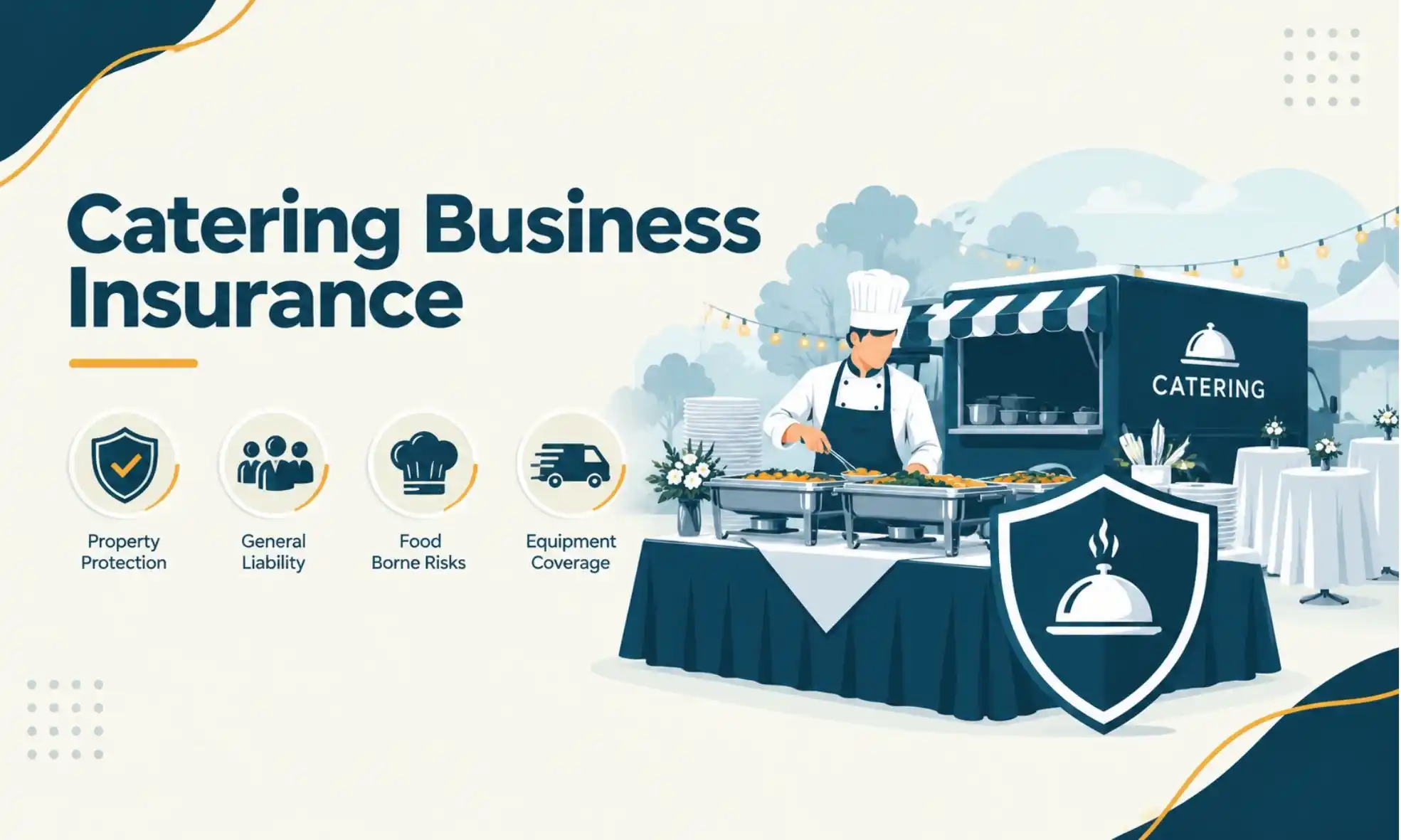
The catering business insurance is a bundle of commercial insurance policies for the food service professionals that prepare and serve food for the off-site locations. This protects your business, the employees, and the equipment from the unexpected accidents, property damage, and lawsuits.
Note: Insurance coverage that depends on endorsements, policy terms, or exclusions for applicable limits.
Why Do Catering Businesses Need Insurance?
1. General Liability Insurance
The catering involves it in serving food for private events, weddings, corporate events, outdoor gatherings, and weddings. This creates many risks. You can face claims for foodborne diseases or allergic reactions. The guest falls or slips and can fall for the event; this policy will help in covering the costs.
2. Product Liability Insurance
This will cover claims that are related to the food you can serve, like foodborne illness, allergic reactions, and contamination. Often the “products-completed operations” for coverage that’s included directly for the general liability policy are subject to the specific terms.
3. Commercial Property Insurance
This protects the physical business assets. This covers the kitchen facilities, cooking equipment, and refrigerators, plus the inventory against that covered for events like theft, fire, or severe weather.
4. Workers' Compensation Insurance
If the employee gets hurt based on the job, like the chef suffering or a server tripping or burns or the inventory, this covers the medical expenses plus lost wages. The legal requirements can change based on workforce or state arrangements.
5. Commercial Auto Insurance
This covers business-owned vehicles that are used for deliveries, moving equipment, or event transportation. If that’s used for employee-owned or rented businesses, you need the hire for non-owned auto liability coverage.
6. Liquor Liability Insurance
If you’re catering in a business that can serve alcohol, you actually need this. This protects lost income.
7. Business Interruption and Food Spoilage Coverage
If the covered event forces you to shut down, this will replace that lost income
The food spoilage coverage generally protects from perishable inventory if the refrigeration unit does not work or breaks down. Note that the spoilage plus equipment breaks for the specific policy endorsements.
8. Additional Coverage Options
You also need inland marine insurance for the portable equipment in transit, the cyber liability insurance can store customer data, and the commercial umbrella insurance for those extra liability limits. To see how these policies fit into a wider risk plan, read our guide on the top 7 types of insurance every growing business needs.
Catering Business Insurance Coverage Comparison
How Much Does Catering Business Insurance Cost in the USA?
The costs related to catering business insurance cost changes broadly based on different aspects. There’s no basic price for the company. The premiums are influenced by the business size, number of employees, annual revenue, payroll, and the stages where they can operate. The number plus size for your events, your vehicles, you can serve alcohol, coverage limits, equipment, and claims history that play a major role for the final price.
Here’s the general monthly cost benchmark for the catering business insurance in the USA:
Note: These are the estimated ranges. The actual premiums that directly depend on a particular business profile plus the insurer.
Is Catering Business Insurance Required by Law?
These are the major differences between the coverage that’s required by law and the coverage required by clients:
State Workers' Compensation Requirements
Almost all the states require worker’s compensation if you have employees. However, the right type of rules, employee threshold, plus the exemption change based on the state. You need to check the local laws.
Insurance Requirements for Wedding Venues and Corporate Events
Most of the venues and corporate clients do require you to provide the (COI) Certificate of Insurance. They generally ask as in "added under 'additional insured.'" Most of the venue contracts need a basic liability limit of around $1 million for each occurrence, although the catering business insurance requirements can change based on certain specified contracts. Before you sign any agreement, check what insurance you need before signing large business contracts.
How to Choose the Right Insurance for Your Catering Business
Finding the right kind of protection will take that little research. Follow these major 5 steps:
- Identify Risks: Look in super deep for the specified catering services, event type, or menus.
- Assess Exposures: Evaluate the employee count and equipment value plus vehicle usage.
- Review Contracts: Check in the venue contracts for understanding the required limits of insurance.
- Compare Policies: Look deeply for the exclusions, coverage details, and quotes along with deductibles. When you choose the right hospitality insurance policy, it looks at the comprehensive commercial insurance for small businesses for ensuring you're not missing any type of gaps.
- Review Annually: Update the insurance each year as soon as your business grows. A business insurance renewal checklist for 2026 can make this review easier.
Talking with an expert insurance broker that’s highly recommended for ensuring that you get the right kind of fit.
Common Catering Insurance Mistakes to Avoid
Do avoid these kinds of catering insurance mistakes to get the right kind of insurance:
- Taking into account the assumption that the personal auto policy will cover all the business deliveries.
- Overlooking the off-site event exclusions for your property policy.
- Relying just on basic liability for incidents that are alcohol-related without having the liquor liability.
- Ignoring exposures to equipment in transit or food spoilage.
- Buying insufficient or ineffective liability limits for saving money.
- Failing to update your coverage after expanding the operations or the menu.
How ALKEME Helps Catering Businesses Find the Right Coverage
Alkeme is a major U.S. insurance brokerage company that assists businesses to get insurance based on their unique needs. Whether you need that broad hospitality insurance coverage or the specialized restaurant insurance in Florida, the experts are here to help. We will be focusing on identification of exposure gaps, comparing the suitable coverage options, and ensuring that you completely understand the catering insurance coverage that’s required for specified operations.
Protect Your Catering Business With the Right Insurance Coverage - Connect With ALKEME Insurance.
1. What insurance does a catering business need?
At a basic minimum, the general liability, worker’s compensation, and commercial property. Most of the caterers do require commercial auto, food spoilage, and product liability.
2. How much does catering business insurance cost?
Costs change, but the major policy generally costs around $50 to $150 each month. The right catering business insurance cost directly depends upon location, size, or services.
3. Do I need insurance for a small home-based catering business?
Yes, even though you can cook from home, you can face risks like client injuries or foodborne illness. The standard homeowners insurance will not cover these liabilities.
4. Does catering insurance cover food poisoning?
Yes, the product liability coverage (a basic part of general liability) that covers claims like allergic reactions or foodborne illnesses, although subject to policy terms.
5. Is general liability insurance enough for a catering business?
No, the general liability will not be covering your employees’ injuries, your equipment, and also the business vehicles. You need a broader package.
6. Do caterers need liquor liability insurance?
If you sell, serve, or distribute alcohol for your events or more, you do require liquor liability insurance for protecting against the alcohol-related claims.
7. Can I get catering insurance for a single event?
Yes, the insurers will provide single-event or short-term insurance policies for the one-time catering jobs.
8. Does restaurant insurance cover off-site catering events?
Sometimes, but not generally. The standard restaurant policies are designed for on-premises dining. You can generally add the off-site catering coverage of the policy.
Final Thoughts
Protection of catering business is not just important as in perfecting the recipes. The best catering business insurance will ensure that the single accident or lawsuit does not ruin your hard work. For understanding the risks, reviewing contracts along with working with a highly trusted professional that can easily serve clients along with growing their business for those years to come. Ultimately, securing that complete coverage does provide the invaluable peace of mind, thus allowing for focusing on culinary experiences without worrying about what "ifs." As the catering company that evolves and takes on larger, more complicated events, remember to regularly update the policy for matching that expanding needs. Don’t leave the livelihood for chance; do take the proactive steps today for safeguarding your passion, the dedicated team, and the financial future for the unexpected challenges that can arise for the food service industry.