When you hear "marine," you will be thinking about ships, oceans, or cargo vessels. However, under the insurance world, inland marine insurance has nothing to do with the ocean at all. Instead of it, this is a highly vital coverage that’s created for valuable tools, property, equipment, and tools that will move across the land.
Whether you're the contractor moving tools for the job site, a tech company with mobile equipment, or a transporting goods as a trucking company, understanding the inland marine insurance coverage is important. This blog is a complete guide on what exactly marine insurance is and who requires it, and how that protects your business beyond that traditional trucking.
What is Inland Marine Insurance?
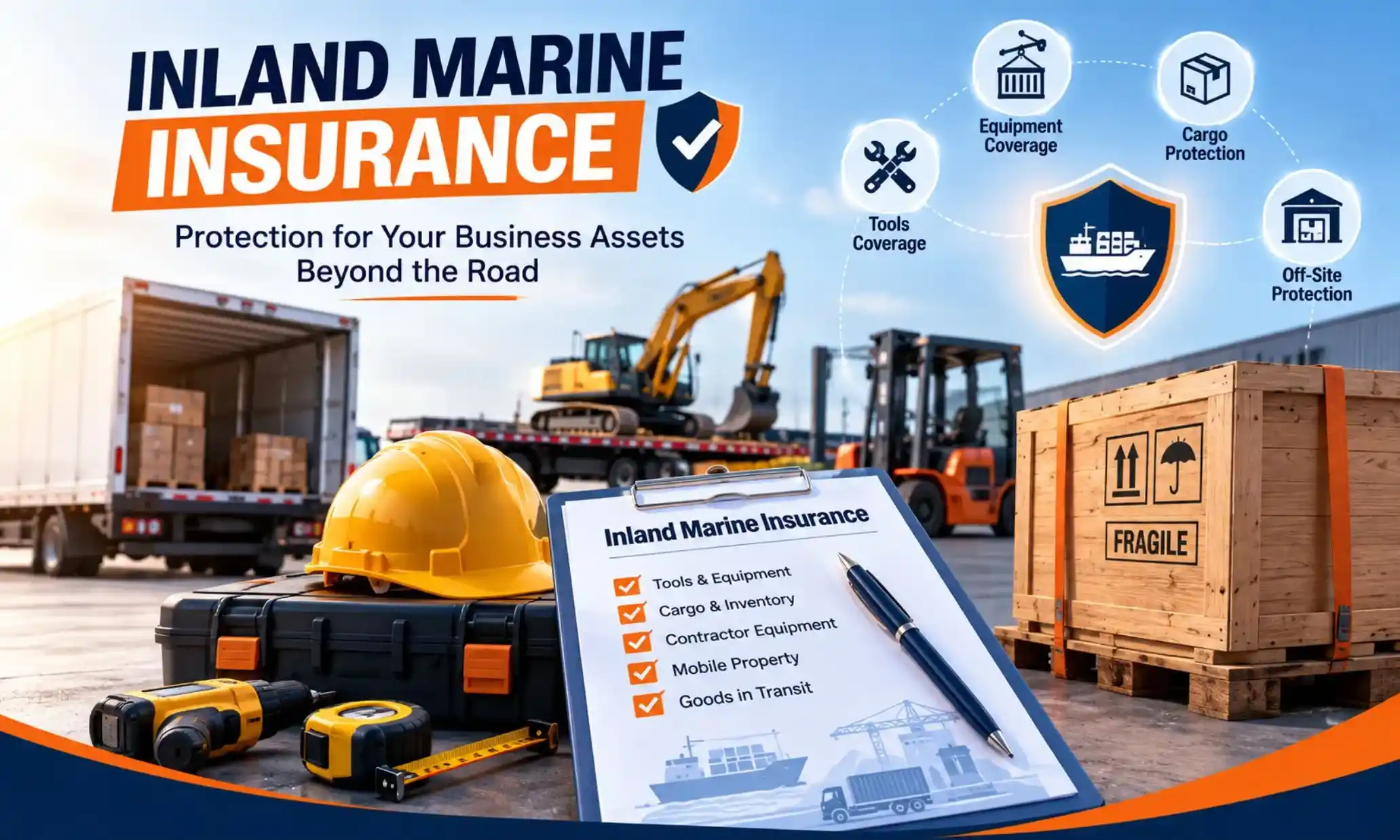
The inland marine insurance is actually a form of commercial insurance that actually covers different movable property, goods, and equipment while they are temporarily located or in transit away from the primary business address.
In historical senses, this was created for coverage of goods that are transported across railways, inland waterways, or roads. Today, inland marine insurance has evolved to high-value business property that will stay under one fixed location. This can fill in the gap that’s left under the standard commercial property policies that can typically cover those assets under a permanent or specific address.
What Does Inland Marine Insurance Cover?
The main scope of inland marine insurance coverage is highly customizable and broad as well. Here’s the breakdown of what does inland marine insurance covers:
Property and Equipment in Transit
This can cover the business property while that has been transported from one location to a different location. If the company vehicle gets involved in an accident or any equipment gets stolen from the trailer on the highway, this type of coverage will pay for these kinds of losses.
Contractor Tools and Equipment
For the tradespeople, the inland marine insurance for contractors is a major lifesaver. This covers the hand tools, heavy machinery, and power tools that are regularly loaded onto vehicles and taken across different work sites. For a deeper look at how these policies fit together, see our contractor insurance explained guide.
Valuable Property at Temporary Locations
If the business operates under the temporary spaces, like the pop-up retail shop, rented event space, or temporary office, the coverage protects the assets while they are there, even if they don't own that building.
Installation and Specialized Equipment
This can apply to the technicians or contractors who can install specialized systems (solar panels, HVAC units, or custom machinery). This can cover the equipment from the moment that it can leave for the warehouse until this is fully installed and gets accepted under the client.
Communication and Technology Equipment
Businesses that can rely on mobile technology, like the broadcasting companies, event producers, and IT consultants, can also be used to cover laptops, servers, cameras, and the visual/audio gear that can cover travel for the employees.
Inland Marine Insurance vs. Commercial Property Insurance
Most business owners confuse the two policies. The basic way for understanding the difference that’s the commercial property insurance for the stationary assets, for the mainland marine towards the movable assets:
Major Point: The inland marine insurance that’s designed for property that does not have property that will not stay for a fixed location. If the assets are constantly moving, the standard commercial property will basically leave dangerous gaps.
Inland Marine Insurance vs. Cargo Insurance
While these can sound the same, these are the distinct differences when comparing inland marine vs. cargo insurance. The cargo is specifically designed for covering the goods of freight that are transported on behalf of someone else (the goods that you sell) while these are in transit.
For contrast, the inland marine insurance is broader. This covers the owner's own business equipment, specialized property, and tools, regardless of whether this is being used for transporting goods for others. While there is some overlap, the inland marine will focus on tools, whereas the cargo insurance will focus on the freight itself.
Who Needs Inland Marine Insurance?
Because modern businesses are highly mobile, most industries benefit from commercial inland marine insurance. You can need that you’re in:
- Construction Companies: Protection of tools along with heavy equipment that moves between different job sites.
- Contractors: Scaffolding, covering mobile tools, and special trade equipment.
- Manufacturers: Insurance of equipment or the prototype products that are transported for clients as well as other facilities.
- Technology Companies: Protection of the specialized equipment, servers, and testing devices that can travel for technicians.
- Medical Equipment Businesses: Coverage of valuable diagnostic machines that’s temporarily stored or transported across clinics.
- Event Companies: Lighting, insurance staging, event, and visual/audio equipment.
- Retailers and Distributors: Covering those high-value goods when moving between stores and warehouses.
- Trucking & Transportation Businesses: Providing inland marine insurance for trucking for covering the own equipment, property, or trailers beyond cargo as well. Explore our trucking and transportation insurance solutions for a closer look.
Common Risks Inland Marine Insurance May Cover
The mobile equipment insurance that will cover its protection of accidental and sudden risks, which includes:
- Vandalism or theft for equipment or tools.
- Accidental damage for unloading, loading, or also on transit.
- Explosion, lightning, or fire
- Severe conditions of weather (like wind or hail damage) while the property is in a temporary area.
- Collisions that involve vehicles transporting that equipment (damage to equipment and not the vehicle)
What Inland Marine Insurance Typically Does Not Cover
No coverage plan will cover everything. Some of the common exclusions are
- Normal wear and tear, gradual deterioration, and mechanical breakdown.
- Fraudulent acts or intentional damage from the business owner.
- Employee Theft (this needs a different crime policy).
- Damage towards vehicles (the coverage of this aspect is under Commercial Auto Insurance, not that of inland marine)
- Earthquake or flood damage (although specifically added through an endorsement)
How Much Inland Marine Insurance Do You Need?
The right amount of coverage you require will depend upon the total replacement value of those mobile assets. For determining this, just create a basic inventory of your tools, property, and equipment that leaves that primary business address. Add up under the current replacement cost (not the deprecated value) for these items. The policy limits need to be high enough for replacing everything for once under the event of a total loss, like the fire at the job site or stolen work van.
Inland Marine Insurance Example
Consider the real-world system. A construction business owns the $250,000 in tools plus heavy-weight equipment that can move across different job sites. Under a night, a piece of equipment gets stolen from that unfenced, temporary job site.
This is how the coverage is performed here:
- The equipment was not in the company's insured premises.
- Traditional commercial property coverage has restrictions here or excludes this based on the equipment, not on the main address.
- Through an inland marine insurance under the mobile equipment insurance, the equipment cost will be covered under it.
- However, the real claim outcome directly depends on the policy’s specific terms, chosen deductible, and exclusions.
- However, the real claim directly depends on the policy terms, chosen deductible, exclusions, and limits.
This instance highlights why you should not rely only on standard policy, as it’s a massive gamble for mobile businesses.
How to Choose the Right Inland Marine Coverage
So, how to choose the right type of commercial inland marine insurance:
- Inventory Your Assets: Knowing exactly what you own and what that costs for it to replace.
- Identify the Risks: Determining where exactly the equipment goes and what type of hazard that faces (rough transit roads, high theft areas).
- Review Policy Limits: Do ensure that the limits are high enough for covering those most expensive single items plus total asset value.
- Check Exclusions: Read those fine printings for understanding what is covered and not covered.
- Work with a Specialist: Partner with the right insurance broker that understands your needs for that specific industry, whether it’s inland marine insurance for trucking, contractors, or inland marine insurance for equipment, etc.
Why Inland Marine Insurance Matters for Modern Businesses
The workforce of today is highly mobile. Through the rise of remote work sites, on-demand services, and complicated supply chains, the business property is constantly moving. The inland marine insurance for equipment can ensure those operational capabilities that are not halted by those unfortunate events. This provides those financial safety nets that are needed for critical tools, thus keeping those projects on schedule and the businesses that run smoothly.
Frequently Asked Questions About Inland Marine Insurance
Is inland marine insurance only for trucking companies?
No, this is useful for trucking as well as the inland marine insurance for trucking. This is important for businesses for the valuable property that can move; that includes the contractors, tech companies, and event planners.
What does inland marine insurance cover?
This covers the movable business property, equipment, tools, and goods that are in transit for those temporary locations that are away from the primary business address.
Does inland marine insurance cover equipment at a job site?
Yeah, this is one of those primary purposes. This protects the equipment while it's temporary on the client’s location for the construction site.
What is the difference between inland marine and cargo insurance?
The cargo insurance that can cover the goods or freight that's being transported for others. Inland marine insurance is broader and typically covers the business tools, specialized property, and equipment.
Does inland marine insurance cover theft?
Yes, the theft of cover for mobile equipment or property is a common plus primary risk that’s addressed for inland marine policies.
Who typically needs inland marine insurance?
Construction companies, contractors, event producers, manufacturers, medical equipment providers, and the trucking businesses that will need coverage.
How much does inland marine insurance cost?
The costs are based on the high total value of the equipment, your industry and type of property, and the claims history. This is basically the affordable addition for the commercial insurance package.
Protect Your Business's Mobile Property With the Right Coverage
Despite the name, the inland marine insurance is much broader than the origins can suggest. This is a major tool for protection of the equipment, specialized property, and tools, plus movable assets. However, this is important for remembering the inland marine does not automatically replace cargo, commercial auto insurance, and commercial property. Every policy that can serve that distinct purpose for the complete risk mitigation strategy.
Don’t just leave the most valuable assets; that’s exposed to unnecessary risk. The team from ALKEME is here to help it navigate the complexities of that commercial insurance. Just contact us today to speak with an experienced professional that can identify the coverage gaps and build a basically tailored inland marine insurance that will keep your insurance solution and will keep the businesses that can move forward.