Running a business today means managing far more than sales, service, and operations. It also means managing people hiring them, supervising them, promoting them, and sometimes letting them go. Every one of those moments carries legal exposure. A single employee, former employee, or even a rejected job applicant can file a claim alleging discrimination, harassment, wrongful termination, or retaliation, and the cost of defending that claim can run into tens of thousands of dollars even when the allegation has no merit. This is exactly the gap Employment Practices Liability Insurance (EPLI) is built to close.
The modern workplace is governed by a dense web of federal, state, and local employment laws, and even well-intentioned employers can find themselves on the wrong side of a claim they never saw coming. A rejected candidate can allege discriminatory hiring practices. A terminated employee can claim the decision was retaliatory. A manager's offhand comment can turn into a harassment complaint. None of these scenarios require the employer to have done anything wrong for a claim, and the legal costs that follow, to still show up.
In this guide, we break down what EPLI actually covers, what it leaves out, why it matters regardless of company size, how it fits alongside the other coverages in your business insurance program, and what to look for when choosing or renewing a policy.
What is Employment Practices Liability Insurance?
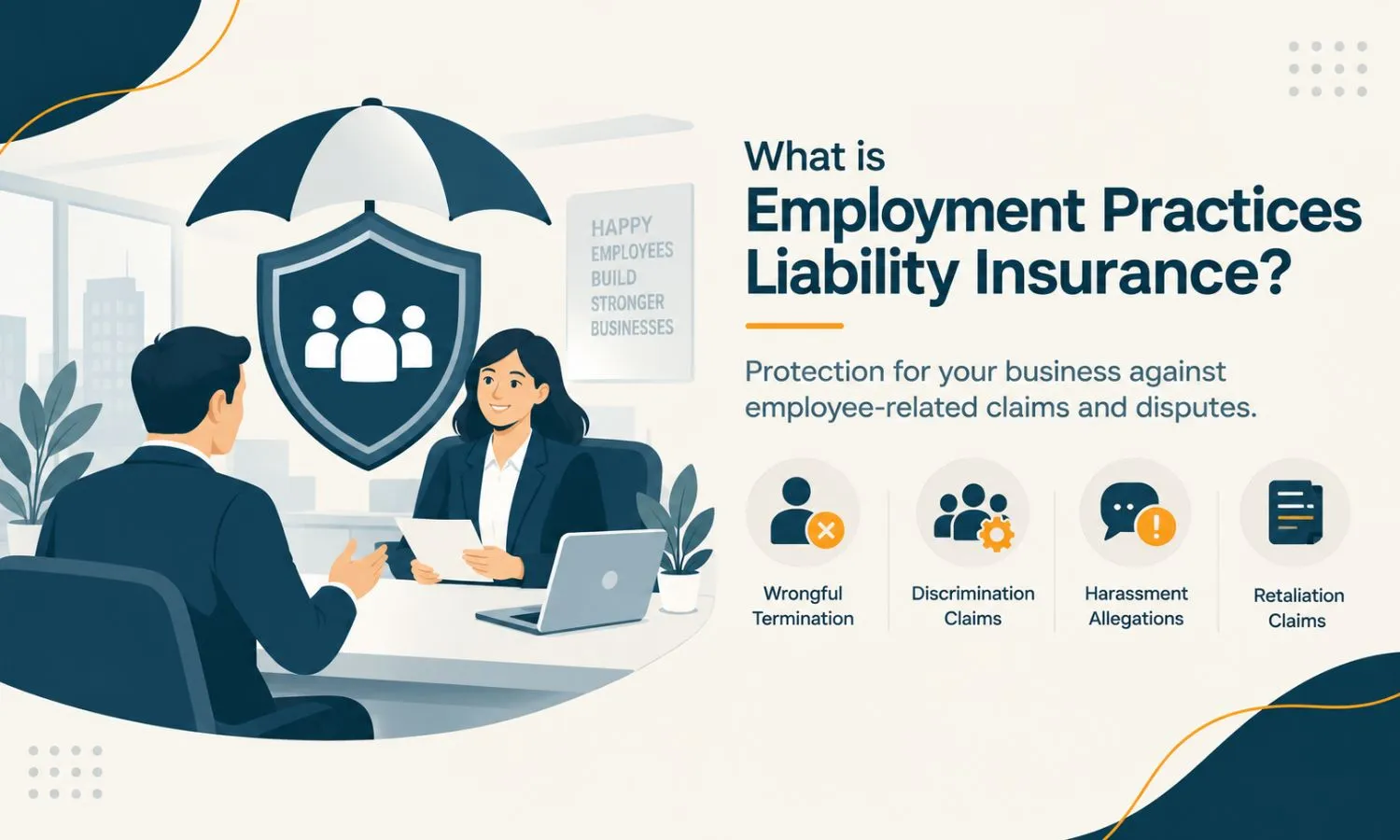
EPLI is a form of liability insurance that protects employers from the financial fallout of employment-related claims. It typically pays for legal defense costs, settlements, and judgments arising from claims brought by current employees, former employees, or job applicants who allege that their legal rights were violated during the employment relationship.
Unlike general liability insurance, which addresses third-party bodily injury or property damage, EPLI is built specifically around the employer-employee relationship. It sits inside the broader category of casualty coverage that most commercial policies are built around, alongside workers' compensation, commercial auto, and umbrella coverage.
What Does EPLI Cover and What Doesn't It Cover?
EPLI policies are written broadly enough to capture most of the claims that arise out of hiring, managing, and terminating staff. But like any liability policy, it comes with important exclusions employers need to understand before they assume they're protected. The table below summarizes the most common inclusions and exclusions found in a standard EPLI policy.
Note: Coverage details vary significantly between carriers and policy forms. Always review the exact policy language and exclusions with your broker rather than assuming a standard list applies to your policy.
Common Situations That Trigger EPLI Claims
EPLI claims rarely come from dramatic, obvious misconduct. Far more often, they grow out of everyday management decisions that were handled without documentation or consistency. Some of the most common triggers include:
- Termination decisions: an employee let go shortly after filing a complaint, requesting leave, or reporting an injury may claim the timing was retaliatory, even if the termination was unrelated.
- Promotion and pay decisions: when advancement or compensation isn't tied to documented performance criteria, passed-over employees can allege bias in the decision.
- Workplace conduct complaints: harassment claims often arise not from a single incident but from a pattern the employer failed to investigate or act on.
- Hiring and interview practices: questions about age, family status, disability, or national origin during interviews can expose a business to failure-to-hire claims, even without intent to discriminate.
- Layoffs and restructuring: workforce reductions that disproportionately affect a protected group, even unintentionally, are a frequent source of class-style EPLI claims.
Why EPLI Matters for Every Employer
Many small and mid-sized business owners assume employment-related lawsuits are a large-company problem. In practice, EPLI claims touch businesses of every size, and the risk grows with headcount, industry regulation, and how much direct customer or public interaction employees have. A few reasons EPLI belongs in nearly every commercial insurance program:
- Rising claim volume: employment-related claims, from discrimination to wage disputes, have trended upward for years, and even meritless claims must still be defended.
- High defense costs: legal fees can accumulate quickly regardless of the outcome, and EPLI's duty to defend means the insurer typically pays these costs as the claim unfolds.
- General liability doesn't apply: standard general liability and property policies are built around bodily injury and property damage, not employment disputes, leaving a real coverage gap without EPLI.
- Reputation protection: a well-structured EPLI policy often includes access to HR hotlines, compliance resources, and legal guidance that help resolve disputes before they escalate publicly.
EPLI vs. Other Types of Business Insurance
EPLI is frequently confused with other liability coverages that also involve people-related risk. Understanding the boundaries between them helps employers avoid dangerous coverage gaps.
Note: EPLI and D&O coverage often overlap on employment-related allegations against executives. Businesses with a board of directors should review both policies together to confirm claims aren't inadvertently excluded from each.
What Drives the Cost of EPLI?
EPLI premiums vary based on a handful of predictable factors: number of employees, industry, geographic footprint, prior claims history, and the strength of an employer's HR practices. Businesses with high employee turnover, a large public-facing workforce, or operations in multiple states typically see higher premiums, since each of those factors statistically increases claim frequency. Employers can often reduce premiums by documenting clear HR policies, running regular harassment and discrimination training, and maintaining consistent records of performance reviews and disciplinary actions.
How to Evaluate Your EPLI Coverage
Before renewing or purchasing an EPLI policy, it's worth walking through a short internal review:
- Assess your exposure: consider your workforce size, industry, and how much direct interaction employees have with the public or vulnerable groups.
- Read the exclusions closely: understand what your specific policy leaves out, not just what a generic summary suggests.
- Formalize HR practices: written policies, documented training, and consistent discipline records all reduce both risk and premium.
- Work with a broker who understands your industry: EPLI needs differ meaningfully between a five-person retail shop and a 200-person logistics company.
Note: EPLI is not legally required in any state, unlike workers' compensation. That said, investors, lenders, and commercial landlords increasingly require proof of EPLI coverage as a condition of doing business.
EPLI Needs Look Different by Industry
While the core coverage stays the same, the specific risks EPLI addresses shift depending on the industry. Businesses with seasonal or high-turnover workforces, like amusement parks, face different exposures than trucking companies managing drivers across multiple states, or casinos operating in a heavily regulated, large-workforce environment. Hospitality businesses, law firms, and sports organizations each carry their own combination of turnover, public interaction, and regulatory exposure that should shape how an EPLI policy is structured.
What to Look for When Choosing an EPLI Policy
Not all EPLI policies are structured the same way, and the differences matter once a claim is actually filed. A few specifics worth confirming with your broker before signing:
- Duty to defend vs. duty to reimburse: some policies pay defense costs upfront as a claim proceeds, while others reimburse the employer only after costs are incurred, which can strain cash flow during a long dispute.
- Third-party coverage: businesses with significant customer or vendor contact should confirm whether the policy extends to claims from non-employees, such as clients alleging harassment by staff.
- Wage and hour sub-limits: many carriers cap wage and hour defense costs well below the policy's main limit, which can leave a meaningful gap for businesses with hourly or overtime-eligible staff.
- Prior acts coverage: if you're switching carriers, confirm the new policy covers claims tied to conduct that occurred before the new policy started, not just incidents going forward.
- Included risk-management resources: many EPLI carriers bundle HR hotlines, model handbook language, and compliance training at no extra cost, which is often worth as much as the coverage itself.
Frequently Asked Questions
Does EPLI cover small businesses, or only large employers?
EPLI is relevant to businesses of virtually any size. In fact, smaller employers are sometimes more exposed, since they're less likely to have a dedicated HR department, formal handbook, or documented disciplinary process, all of which insurers and courts look for when evaluating a claim.
Is EPLI the same as Employers' Liability coverage?
No. Employers' Liability typically responds to workplace injury claims that fall outside workers' compensation, while EPLI responds to claims about how an employee was hired, managed, or terminated. The two are often confused because both relate to the employer-employee relationship, but they cover fundamentally different types of disputes.
Can EPLI be added to an existing business owner's policy?
In many cases, yes. EPLI is frequently offered as an endorsement on a business owner's policy (BOP) or bundled with general liability and other casualty coverages, though larger or higher-risk employers often carry it as a standalone policy with higher limits.
Final Thoughts
Employment-related claims are one of the most common — and most preventable — sources of financial exposure for employers of every size. EPLI won't stop a disgruntled employee or rejected applicant from filing a claim, but it does make sure a single dispute doesn't turn into a business-ending event. Pairing the right policy with clear HR practices, documented training, and regular policy reviews is the most reliable way to keep that risk contained.